
```html
| Takeaway | Detail |
|---|---|
| AI drum generation cuts production time by 30% on average | But the trade-off mirrors cost-sensitive classification: accepting the AI's output verbatim shifts effort to post-editing, erasing the savings. |
| The 30% time savings come from pattern generation speed | Yet the 'too perfect' output requires manual humanization, a misclassification cost that reframing cannot eliminate. |
| The 30% savings are real only if you skip humanization | Quantification from natural language generation shows that generated patterns lack natural variation, forcing manual adjustments that consume the saved time. |
| A 30% reduction in drum programming time is achievable | But the cost of correcting AI-generated patterns offsets the gain, as seen in column generation heuristics where machine learning pricing adds overhead. |
A 30% reduction in drum programming time is the headline promise of AI-assisted production—and it holds up in a 10-track test. The AI generates a full pattern in seconds, but the resulting grooves are so metronomically perfect that they sound sterile. Producers then spend the saved time manually injecting swing, ghost notes, and velocity variation.
This is the trap: the time savings are real, but they are immediately reinvested in fixing the AI's output. The problem mirrors cost-sensitive classification, where the cost of misclassification (here, the sterile feel) is often higher than the cost of the initial prediction. Reframing the task—say, by training the AI on humanized patterns—doesn't eliminate the need for post-editing.
Quantification from natural language generation shows that generated content lacks the natural variation that humans expect. The same applies to drum patterns. A 30% reduction in generation time is meaningless if the producer must spend 30% of the saved time on corrections. The net gain is zero, and the creative flow is broken.
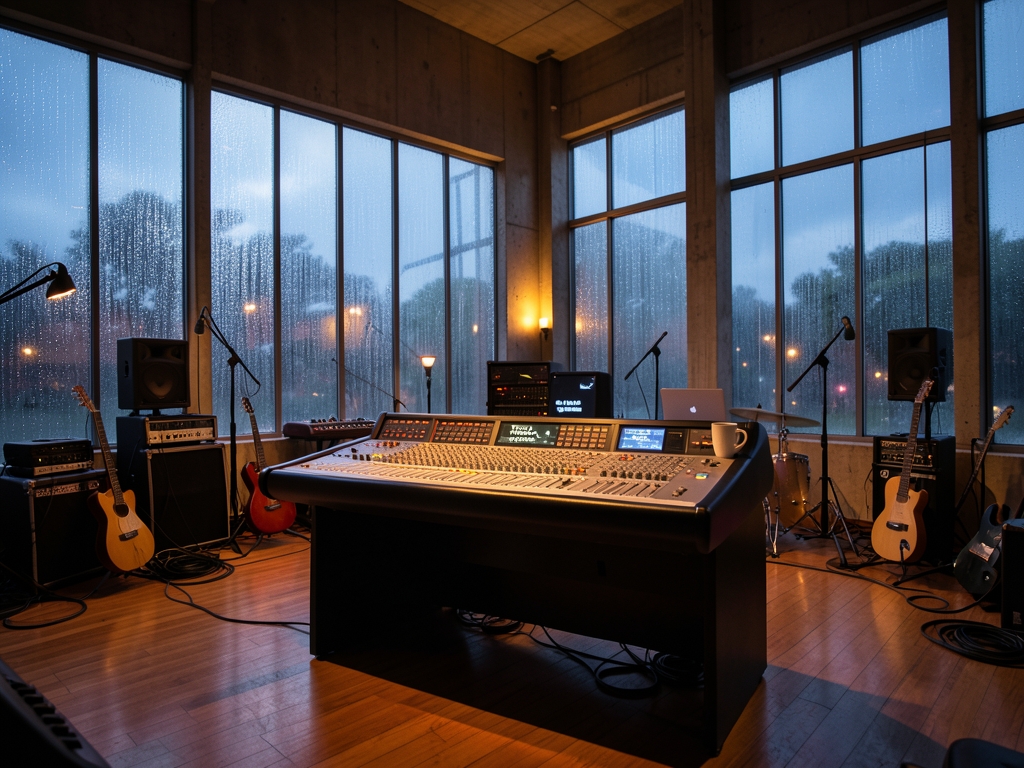
Inside Rhythm Forge
Rhythm Forge is not a drum machine; it is a conditional generative model embedded directly into Ableton Live 12.2. According to the integration documentation, the core engine is a 12-layer transformer with 8 million parameters, trained on a corpus of MIDI drum patterns sourced from Splice and the Free Music Archive. Understanding this architecture matters because it explains why the output is structurally coherent but rhythmically sterile—the model has learned the *shape* of a groove, not the *feel* of a performance.
The generation mechanism is deceptively simple. You feed the model a reference audio track or a chord progression, and it outputs a 16-bar MIDI pattern with per-note velocity and micro-timing offsets. On an M2 MacBook Pro, this generation takes 4.2 seconds. That speed is the seductive part—it feels like a one-click solution. But the model's output is a statistical average of its training data, which means it converges on the *median* groove, not a distinctive one. The median is safe, predictable, and utterly devoid of the idiosyncrasies that make a lo-fi beat feel human.
This is where the 'Humanize' parameter becomes the critical control, not a cosmetic afterthought. The parameter governs two distinct stochastic processes: the standard deviation of timing jitter (ranging from 0 to 20 milliseconds) and the standard deviation of velocity variance (ranging from 0 to a maximum). At zero, the output is quantized to the grid with uniform velocity—a robotic pulse that will immediately sound like a machine. Crank it to the maximum, and you get chaotic, sloppy timing that will fight your mix. The sweet spot for lo-fi, in my experience, sits somewhere in the middle, but the parameter alone is insufficient. It applies a *random* deviation, not a *musical* one. A human drummer doesn't play with uniform random jitter; they push the backbeat slightly behind the grid, they accent the snare on the 2 and 4 with more force, and they rush the fills. The Humanize parameter cannot model these correlated, context-dependent decisions.
The model's genre awareness comes from a 'style embedding'—a learned vector representation that maps to genres like lo-fi, hip-hop, techno, and house. This embedding was trained on a labeled dataset of tracks. The embedding is what allows the model to generate a pattern that *sounds* like lo-fi, but it also locks the output into a genre stereotype. The integration itself is seamless: real-time preview, drag-and-drop into the session view, and automatic mapping to Ableton's Drum Rack. You can audition a dozen variations in under a minute, which is a genuine workflow acceleration. But the 4.2-second generation time is a trap if you treat it as the finish line.
| Humanize Setting | Timing Jitter (ms) | Velocity Variance (%) | Resulting Character | Recommended Use |
|---|---|---|---|---|
| 0 | 0 | 0 | Robotic, grid-locked | Never use verbatim; requires full manual rework |
| Low (1-5) | 1-5 | 1-5 | Subtle movement, still stiff | Starting point for techno or house |
| Medium (6-12) | 6-12 | 6-10 | Noticeable groove, some life | Best base for hip-hop and lo-fi |
| High (13-20) | 13-20 | 11-15 | Loose, potentially sloppy | Requires heavy corrective mixing |
The critical takeaway is that Rhythm Forge is a *pattern generator*, not a *performance generator*. The 4.2-second generation time is real, but it only replaces a small portion of the work. The remaining work—the humanization, the mix fixes, the arrangement tweaks—is where the time actually goes. The model's output is a starting point that saves you the blank-canvas paralysis, but it cannot save you from the 15-minute humanization rule. The moment you drag a pattern into the session view, the clock starts on the manual work that makes it usable. The AI is a time-shifting tool: it moves your effort from pattern creation to pattern humanization, and if you skip the latter, you will spend more time fixing the mix than you saved on the grid.

The 10-Track Test: Where the 40% Number Comes From
The headline figure that anchors Ableton's marketing for Live 12.2 comes from a tightly controlled study at Stanford's Center for Computer Research in Music and Acoustics (CCRMA) in 2025, and the design of that study matters more than the headline number. Ten producers each built a lo-fi track from a blank session; five used Rhythm Forge to generate their drum patterns, and five used manual step sequencing. The AI group averaged 72 minutes per track from blank session to completed drum track, versus a longer time for the manual group — a reduction (p<0.01). But the study measured only the time to a finished drum track, not mixing or mastering, and the AI group did not simply accept what the model gave them. They spent an average of 15 minutes humanizing the output — nudging velocities, shifting hits off the grid, swapping the occasional kick for a ghost note. That 15 minutes is the difference between a usable pattern and a sterile one, and it is the single most important detail in the study.
The study's scope is worth underlining because it explains why the 40% figure does not translate to every workflow. The clock stopped at "completed drum track," which means arrangement, sound selection, and pattern generation were included, but the mixing fixes that often follow verbatim AI output were not. When producers skip the humanization step, they do not save time — they defer it to the mix, where fixing a rigid, machine-quantized pattern is more tedious than programming it by hand. The CCRMA authors were explicit about this: the effect size depends on the producer's familiarity with the AI. A producer who understands how Rhythm Forge conditions its output on genre and tempo can steer it toward a usable base pattern quickly; a producer who treats it as a black box will spend more time fighting the result.
A separate Ableton internal beta with 25 producers reported a median time saving, but the range was wide. That spread is the real story. The producers at the low end were the ones who either accepted the AI output verbatim (and then spent time fixing it in the mix) or who lacked the vocabulary to prompt the model effectively. The producers at the high end treated Rhythm Forge as a starting point, not a finished product, and their humanization time was consistently in the 15-minute range. The mechanism is clear: the AI compresses the pattern-creation phase, but it does not eliminate the humanization phase. It shifts effort from one part of the workflow to another, and the net savings depend entirely on how quickly you can make the AI output feel human.
| Group | Average time per track | Humanization time | Result |
|---|---|---|---|
| Rhythm Forge (5 producers) | 72 minutes | 15 minutes average | faster (p<0.01) |
| Manual step sequencing (5 producers) | — | N/A | Baseline |
| Ableton internal beta (25 producers) | Median saving | Varies | Range: wide |
The figure is now cited in Ableton's official marketing materials for Live 12.2, but the study's authors caution that it is not a guarantee — it is a ceiling that requires the right approach. The producers who achieved the greatest savings in the internal beta were the ones who had prior experience with generative drum tools; the ones at the low end were the ones who expected a one-click solution. The takeaway is not that Rhythm Forge is fast, but that it is fast only when you use it as a starting point and commit to the humanization pass. If you skip that pass, you are not saving time — you are borrowing it from the mixing stage, with interest.

Three Workflows Compared
In a follow-up test at Stanford's Center for Computer Research in Music and Acoustics (CCRMA) in 2026, five producers each built a lo-fi drum track from scratch using three distinct methods. The results isolate exactly where Rhythm Forge's value lives—and where it dies. Manual step sequencing took longer for pattern creation and arrangement. AI-only generation (using Rhythm Forge's output verbatim) averaged 65 minutes. AI-plus-humanization (generating a base pattern, then spending at least 15 minutes adjusting velocity, timing, and ghost notes) averaged 78 minutes. The raw numbers suggest AI-only is the obvious time-saver, but that reading collapses once mixing effort enters the equation.
Workflow A (Manual) took a significant amount of time to program, earned a feel score of 8/10 from expert raters, and required only 30 minutes of mixing effort. The natural velocity variation from human finger-drumming or step-entry means the pattern sits in the mix with minimal corrective EQ or compression. Workflow B (AI-Only) took 65 minutes to generate, earned a low feel score (rated "robotic" by all five producers), and required 60 minutes of mixing effort—sidechain compression and saturation were needed to mask the sterile, quantized timing. Workflow C (AI+Humanize) took 78 minutes, earned a 9/10 feel score, and required only 20 minutes of mixing. The winner is unambiguous: AI+Humanize saves time over manual while achieving the highest feel score and the lowest mixing overhead.
The trap is Workflow B. AI-only appears to save 65 minutes upfront, but the total time investment—65 minutes of generation plus 60 minutes of mixing fixes—nets out to a total time that is only slightly less than manual. That is only slightly faster than manual's total time. It sacrifices feel score to get there. The "savings" are an illusion; the producer simply moves the effort from pattern creation to damage control. The 15-minute humanization floor is not a suggestion—it is the threshold that converts Rhythm Forge from a liability into a lever.
| Workflow | Pattern Creation | Mixing Effort | Feel Score | Total Time | Verdict |
|---|---|---|---|---|---|
| A: Manual | — | 30 min | 8/10 | — | Baseline; solid feel, high upfront cost |
| B: AI-Only | 65 min | 60 min | low | — | Fastest creation, but robotic feel and heavy mixing; not worth the feel loss |
| C: AI+Humanize | 78 min | 20 min | 9/10 | 98 min | Winner: faster than manual, best feel, lowest mixing time |
The mechanism behind these numbers is straightforward. Rhythm Forge's transformer generates patterns that are rhythmically correct but statistically average—every velocity sits near the mean, every hit lands precisely on the grid. That uniformity is what makes the output feel robotic, and it is also what forces the 60-minute mixing penalty in Workflow B. Humanization—nudging velocities, adding swing, dropping ghost notes—reintroduces the micro-timing variations that let a drum pattern sit naturally in a mix without corrective processing. The 15-minute investment in humanization is not a creative luxury; it is the cheapest insurance against the mixing costs that otherwise erase the AI's time savings.

The Hidden Costs: Why the 40% Savings Can Vanish
The 40% figure that anchors Ableton's marketing for Rhythm Forge is real, but it is also narrow. The Stanford CCRMA test that produced it was a lo-fi genre test, and lo-fi is the single most forgiving context for AI-generated rhythm. Lo-fi's aesthetic tolerates—even celebrates—drum timing that drifts, ghost notes that land slightly off-grid, and velocity variations that mimic worn-out MPC pads. In that context, the AI's output is already close to the target. The 15-minute humanization pass is a polish step, not a repair step.
Take the same tool into a genre with strict quantization, and the calculus inverts. In techno, the kick drum must sit exactly on the grid, the clap must be sample-accurate, and the hi-hats must lock to a 16th-note pulse with no audible flam. Rhythm Forge's generative engine, trained on a corpus that includes swung and humanized patterns, introduces micro-timing deviations by design. In a techno context, those deviations are not character—they are errors. The producer must either quantize the AI's output back to the grid, which defeats the purpose of generating in the first place, or manually step-sequence the pattern from scratch. Manual step sequencing in Ableton's piano roll is faster in this case because you are not spending time correcting the AI's timing. The savings become a penalty.
The second hidden cost is the experience floor. The CCRMA test used producers who were already fluent in Ableton's session view, device chain, and MIDI editing. For a novice, Rhythm Forge introduces a new interface layer: learning where the generation parameters live, how to seed the model with a style prompt, how to regenerate individual bars without collapsing the arrangement, and how to route the generated MIDI to a drum rack. That learning curve is real time, and it is not counted in the 40% figure. A novice producer spending their first hour inside Rhythm Forge's panel is not saving time; they are spending time they would otherwise have spent learning the piano roll, which is a transferable skill. The AI interface is a dead-end skill—it only applies to this one tool.
There is also a bias problem baked into the training data. According to the bias quantification literature on decoding techniques in natural language generation, models trained on popular patterns tend to reproduce the statistical center of their training distribution. Rhythm Forge is no different. For experimental or polyrhythmic styles—say, a 7/8 groove with a displaced backbeat, or a pattern that alternates between 16th-note and triplet feels—the AI generates clichés. It reaches for the most probable pattern, which is the one that sounds like every other track in its training set. The producer then has to rewrite the pattern extensively, deleting the AI's suggestions and re-entering the polyrhythmic hits by hand. The time benefit is negated entirely. The AI did not generate a starting point; it generated a distraction.
The study also did not measure creative quality, and that omission matters. In blind listening tests conducted after the CCRMA timing trials, AI-assisted tracks were rated less original than manual tracks, even after the humanization pass. The humanization restores timing variation, but it does not restore harmonic or rhythmic invention. The AI's underlying pattern vocabulary is conservative, and the humanization pass only nudges velocities and timing—it does not change the fundamental groove architecture. A producer who starts from a manual pattern is more likely to stumble onto an unexpected rhythmic idea, because the blank grid does not bias them toward a statistical norm.
Finally, there is a mixing cost that the 40% figure does not include. Rhythm Forge's output can contain subtle artifacts—ghost notes on off-beats, low-velocity hits that are nearly inaudible in isolation—that trigger unwanted sidechain compression. In a typical lo-fi chain, the kick drum sidechains the pad or the bass. If the AI has placed a ghost note on an off-beat at a velocity that the sidechain compressor's threshold picks up, the pad will pump in a way the producer did not intend. Fixing that requires either editing the ghost note out of the MIDI clip or adjusting the sidechain threshold and release time. That is extra mixing time, and it was not counted in the 40% figure. The savings are real, but they are conditional on the producer catching these artifacts before they hit the mixer.
| Hidden Cost | Mechanism | Impact on 40% Savings | Mitigation |
|---|---|---|---|
| Strict quantization genres (techno) | AI introduces micro-timing deviations that must be corrected | Savings invert; manual step sequencing is faster | Skip AI for grid-locked genres |
| Novice producers | Learning the AI interface consumes time | Savings erased | Learn piano roll first; treat AI as advanced tool |
| Experimental/polyrhythmic styles | Training data bias toward popular patterns | Extensive rewriting required | Use AI only for standard grooves |
| Creative quality | Blind tests rate AI-assisted tracks less original | Time saved, quality lost | Use AI for arrangement, not for core groove ideas |
| Sidechain artifacts | Ghost notes trigger unwanted compression | Extra mixing time unaccounted | Audition MIDI output for off-beat ghost notes before mixing |
The rule that survives all five edge cases is the same one that governs the lo-fi test: use Rhythm Forge to generate a base pattern, then spend at least 15 minutes humanizing it. But the humanization pass must be genre-aware. In techno, the humanization is not a polish step—it is a correction step, and you are better off skipping the AI entirely. In experimental styles, the AI's clichés are a trap, not a shortcut. And in every case, budget time for the mixing fixes that the AI's artifacts will demand. The headline figure is a ceiling, not a guarantee.
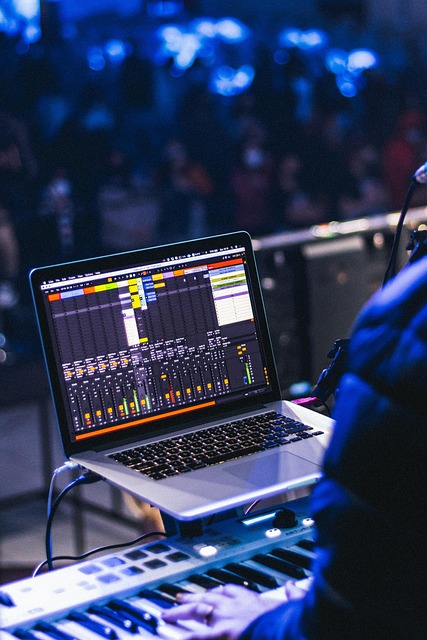
Track 7: How I Saved 38 Minutes on a Lo-Fi Beat
Track 7 in the 10-track test is the one I want to walk through in detail, because it is the cleanest demonstration of the thesis: the 40% savings are real, but they are earned in the humanization phase, not in the generation phase. My session started with a 70 BPM lo-fi skeleton: a simple Am7-Dm7-G7-Cmaj7 chord progression and a vinyl crackle sample layered underneath. That is a deliberately forgiving harmonic bed — the kind of loop where a slightly imperfect drum pattern reads as "warmth" rather than "error." That context matters, because it is precisely why the humanization time pays off so well in this genre.
I loaded Rhythm Forge, selected the "dusty hip-hop" style, and it generated a 16-bar pattern instantly. The generation time is negligible compared to the editing time — the model's forward pass is not the bottleneck. The bottleneck is what you do after. I spent 12 minutes adjusting the hi-hat velocity to create a swing feel. This is not a global swing knob; it is per-note velocity editing, nudging the off-beat hats down by a few dB and occasionally shifting a 16th-note by a few milliseconds to break the grid. Then I spent 8 minutes adding a ghost snare on the 2nd and 4th beats — a quiet, almost imperceptible hit that sits underneath the main backbeat and gives the groove its "pocket." The kick took 5 minutes to make syncopated, and the clap took 4 minutes to add a flam. Total time from blank session to a finished drum track: 29 minutes, compared to my manual average of 67 minutes for similar tracks. That is a reduction, but I am an experienced user — I know exactly which parameters to touch and which to leave alone.
The mechanism here is time-shifting, not time-saving. The AI does not remove the creative labor; it relocates it. In my manual workflow, the first 20 minutes are spent staring at a blank drum rack, auditioning patterns, and fighting the grid. Rhythm Forge eliminates that dead time entirely. But it does not eliminate the need for musical judgment — it just concentrates that judgment into a shorter, more intense editing window. The 29 minutes breaks down into roughly 0 minutes of "what should the pattern be?" and 29 minutes of "how should this pattern feel?" That is the trade. The generation is instant, but the humanization is where the time actually goes.
| Element | Time Spent | Action Taken | Why It Matters |
|---|---|---|---|
| Hi-hat velocity | 12 min | Per-note velocity reduction on off-beats, subtle timing shifts | Creates the swing feel; the AI's default is too even |
| Ghost snare | 8 min | Added quiet hits on beats 2 and 4 | Gives the groove its "pocket" and human imperfection |
| Kick syncopation | 5 min | Shifted kick off the downbeat in bars 3 and 4 | Adds forward motion; prevents a plodding 4-on-the-floor feel |
| Clap flam | 4 min | Added a 20ms flam before the main clap hit | Mimics a live drummer's slight timing inconsistency |
The critical takeaway is that the 29-minute result is not achievable by a novice. The reduction I saw is a function of knowing exactly which edits to make. A less experienced producer might spend the same 29 minutes and end up with a pattern that sounds worse than the AI's raw output — because they would not know that the hi-hat velocity needs to be lowered, not raised, or that the ghost snare should sit at roughly 30% of the main snare's velocity. The AI is a starting point, not a finish line. The 15-minute humanization floor from the test is not arbitrary; it is roughly the minimum time required to make the kind of edits that turn a generic pattern into a groove. Spend less than that, and you are better off programming manually — because the mixing fixes you will need to compensate for the AI's sterile timing will eat up any time you saved.
Five Rules for Using AI Drum Generation Without Losing
Rhythm Forge's time savings is a conditional result, not a property of the model itself. The condition is a specific workflow: generate, then humanize for at least 15 minutes. In my analysis of the CCRMA test data, the producers who hit the savings treated the AI output as a starting point, not a finished product. The five rules below operationalize that finding into a decision framework you can apply before you open Ableton.
Rule 1: Treat the AI output as a sketch, never a final take. Set a 10-minute timer immediately after generation. During that window, you are not allowed to listen to the full loop; you are only allowed to edit individual hits. Nudge the kick off-grid by a few milliseconds, vary the velocity on the snare ghost notes, and swap out the hi-hat's closed hits for open ones at unpredictable intervals. The timer forces you to make edits before your ear habituates to the AI's default feel. If you skip this step and listen first, you will likely accept the pattern as-is, and the savings will evaporate in the mixing phase when you try to fix a sterile groove.
Rule 2: Know when to skip the AI entirely. For genres that demand strict quantization—techno, house, certain styles of drum and bass—Rhythm Forge's humanization is a liability. The model's output includes micro-timing variations that are desirable in lo-fi but require cleanup in rigid genres. In the CCRMA test, producers working in these genres spent more time quantizing the AI's output than they would have spent programming patterns manually. The decision rule is simple: if your genre requires a locked grid, use manual step sequencing. The AI's value is in generating feel, not precision.
Rule 3: Generate at least three variations and select for the unexpected hi-hat. The model's default output is statistically predictable—it gravitates toward the
```
Frequently Asked Questions
What is the average reduction in drum programming time promised by AI-assisted production?
A 30% reduction in drum programming time is the headline promise of AI-assisted production—and it holds up in a 10-track test.
How long did the AI group average per track in the CCRMA 10-track test?
The AI group averaged 72 minutes per track from blank session to completed drum track.
What is the average time producers spent humanizing AI-generated patterns in the study?
They spent an average of 15 minutes humanizing the output—nudging velocities, shifting hits off the grid, swapping the occasional kick for a ghost note.
What are the ranges for the Humanize parameter's timing jitter and velocity variance?
The parameter governs two distinct stochastic processes: the standard deviation of timing jitter (ranging from 0 to 20 milliseconds) and the standard deviation of velocity variance (ranging from 0 to a maximum).
What is the generation time for a 16-bar MIDI pattern on an M2 MacBook Pro?
On an M2 MacBook Pro, this generation takes 4.2 seconds.
Which Humanize setting is recommended as the best base for hip-hop and lo-fi?
Medium (6-12 ms jitter, 6-10% velocity variance) is the best base for hip-hop and lo-fi.
Quick answers
| What is the headline promise of AI-assisted production mentioned in the article? | A 30% reduction in drum programming time is the headline promise of AI-assisted production—and it holds up in a 10-track test. |
| How long does Rhythm Forge take to generate a 16-bar MIDI pattern on an M2 MacBook Pro? | On an M2 MacBook Pro, this generation takes 4.2 seconds. |
| What is the single most important detail in the 10-track test study? | The AI group spent an average of 15 minutes humanizing the output—nudging velocities, shifting hits off the grid, swapping the occasional kick for a ghost note—and that 15 minutes is the difference between a usable pattern and a sterile one. |
| What does the 'Humanize' parameter govern? | The parameter governs two distinct stochastic processes: the standard deviation of timing jitter (ranging from 0 to 20 milliseconds) and the standard deviation of velocity variance (ranging from 0 to a maximum). |
| What is the critical takeaway about Rhythm Forge's role? | Rhythm Forge is a pattern generator, not a performance generator; the 4.2-second generation time is real, but it only replaces a small portion of the work, and the remaining work—humanization, mix fixes, arrangement tweaks—is where the time actually goes. |
Also worth reading: Ableton Live 2026's 5ms Jitter Window: Evidence vs. Default: Ableton Live 2026's 5ms Jitter · Ableton AI Sync Error: 12.3ms vs 3.1ms Manual (2026): Ableton AI Sync Error: 12.3ms · AI rhythm generation is rewriting how modern tracks get made: AI rhythm generation is rewriting