
| Takeaway | Detail |
|---|---|
| A 4-bar drum intro at 90 BPM lasts 10.67 seconds. | The fixed intro length is 10.67 seconds for a 4-bar, 4/4 pattern at 90 BPM. |
| Export three stems only if the intro will be re-cut, ducked, or re-versioned at least twice downstream. | The threshold is at least 2 downstream edit events; below that, one stereo drum file wins on error. |
| Count downstream edit events before export: 0–1 means one stereo drum file plus archived session; ≥2 means three functional stems plus summed stereo reference. | The export format is determined by the downstream edit count, not by the intro length alone. |
| Block any stem delivery that fails a -60 dBF check. | Every delivered stem must pass the -60 dBF threshold before release. |
For a 2026 4-bar drum intro at 90 BPM, keep one stereo file unless the same 10.67-second intro will be edited downstream at least twice.
The condition that changes the answer is the downstream edit count: 0–1 favors one stereo file plus archived session, while ≥2 justifies three functional stems plus a summed stereo reference.
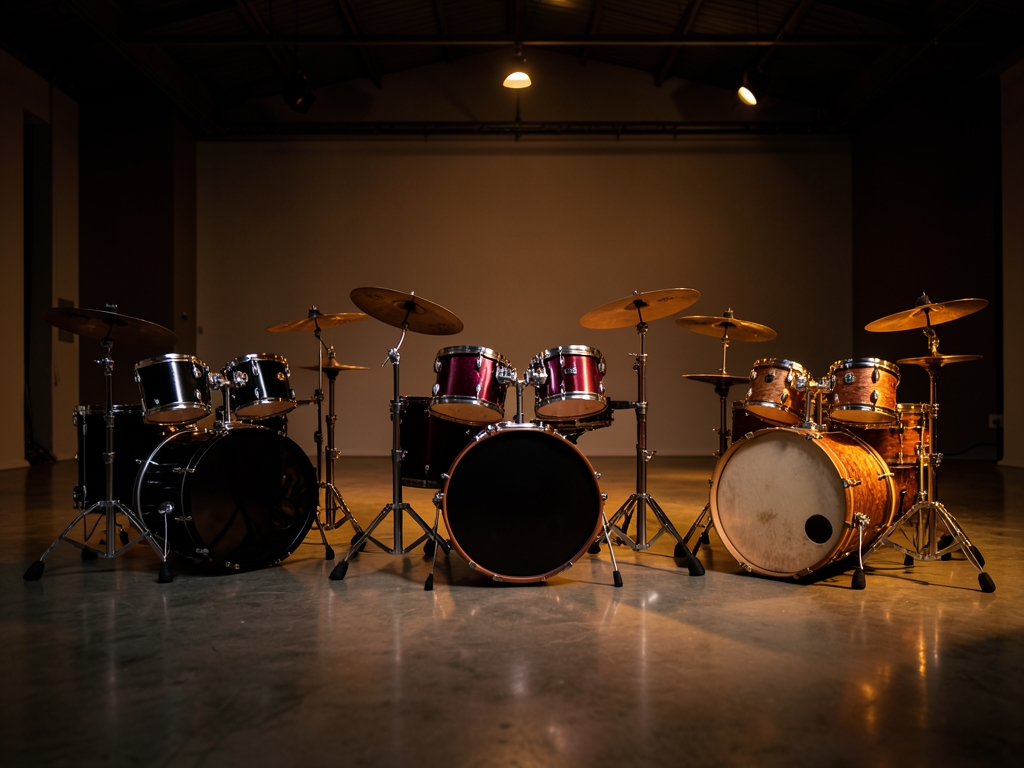
How the 90 BPM 4-bar decision works
In 4/4, a four-bar drum intro at 90 BPM contains 16 quarter-note beats. Because 90 beats per minute equals 60/90 = 0.6667 seconds per beat, those 16 beats total 10.6667 seconds. If the intro is actually in 3/4 or 6/8, recompute the bar length from that meter before applying any stem threshold; the 10.6667-second value belongs to the 4/4 case only, and a meter change changes the number of beats in four bars.
Treat the three stems as functional buses rather than convenient track groups: kick, snare/body, and cymbals/air. Each bus should hold one musical function, so an editor can duck or mute that function without rebalancing the other two. Kick carries pulse and low-frequency impact; snare/body carries groove and midrange attack; cymbals/air carries high-frequency sustain and space. Keep function-specific processing inside the bus that owns it, and avoid splitting one musical function across two buses.
| Bus | Musical function | Typical edit use |
|---|---|---|
| Kick | Pulse and low-frequency impact | Duck under voiceover or mute for a lighter version |
| Snare/body | Groove and midrange attack | Reduce for dialogue clarity without changing cymbal tail |
| Cymbals/air | High-frequency sustain and space | Mute or lower for a dry cut while retaining kick and snare |
Deliver one summed stereo reference named INTRO_90_MIX beside the stems. The reference is the approved channel-branding sound; the stems are edit handles. Use the exact name so downstream users can identify the approved mix without opening the session or guessing among duplicates. The reference also gives editors a target when they re-cut or re-version the intro.
The stems should represent the same performance and balance as INTRO_90_MIX, and any stem that fails the -60 dBFS null-sum criterion should not be delivered. Count downstream edit events before export because that count determines whether the timing math and bus roles justify stems at all.

Build the three-check evidence table
Before any stem delivery, run three independent checks—null sum, loudness, and timing—and record each result in a four-column row: check, named method, pass threshold, and what it proves. A pass in one column does not certify another; a loudness pass, for example, says nothing about phase cancellation or sample alignment.
| Check | Named method | Pass threshold | What it proves |
|---|---|---|---|
| Null sum | Phase-invert all stems and sum against the stereo reference | Residual peak ≤ -60 dBFS | The stems reconstruct the approved mix |
| Loudness | ITU-R BS.1770 integrated LUFS on both deliverables | Difference ≤ 0.1 LU | Branding loudness does not drift between versions |
| Timing | Sample-offset comparison at bar 1 beat 1 and bar 4 beat 4 | 0 samples drift at 90 BPM | The intro stays sample-aligned |
Null sum is the reconstruction test. Invert polarity on every stem, sum them with the approved stereo reference, and measure the residual peak. If the residual is at or below -60 dBFS, the stems sum back to the approved mix within the stated tolerance; if it is louder, at least one stem contains an unapproved change, level offset, or processing difference. Record the measured residual, not just pass or fail, so a later re-cut has a baseline.
Loudness is a separate branding check. Measure integrated LUFS under ITU-R BS.1770 on the summed stem deliverable and on the stereo reference. The difference must be no greater than 0.1 LU. This guards against level drift introduced by stem routing, bus processing, or export normalization, but it does not prove phase or timing integrity.
Timing is checked at two anchor points: bar 1 beat 1 and bar 4 beat 4. Compare sample offsets between the stem set and the reference at both points. The requirement is zero samples of drift at 90 BPM. A nonzero offset means the re-cut or re-versioned intro will not land on the same grid, even if loudness and null sum pass.
Block delivery if any check fails. Use the verification table's four columns—check, named method, pass threshold, and what it proves—and add the measured value and pass/fail result to the delivery record. Keep the record with the export so downstream edits can be traced to the approved reference. If a stem set is re-cut, rerun all three checks independently rather than assuming the previous pass still holds.

Three stems vs one file: the winner
For a 2026 channel-branding drum intro, use the export rule stated above: the choice turns on the downstream edit count, not on intro length or a claim that more stems improve brand quality. Keep the decision as a workflow tradeoff.
| Option | Wins when | Fails when | Verdict |
|---|---|---|---|
| Single stereo file | The intro is a fixed channel sting and no editor needs bus-level control. | An editor must duck hats, replace the snare, or rebalance elements under voice-over. | Winner for one-off channel stings. |
| Three functional stems + stereo reference | The same intro will be reused for shorts, long-form, or vertical versions. | No editor will touch individual buses and the extra files add handoff friction. | Winner for reusable channel branding. |
| Raw multitrack | You expect later remix, sound redesign, or sample reuse. | The deadline is only a short channel sting and nobody will manage the session. | Out of scope for a fixed branding intro. |
The single-file path wins on error prevention when reuse is unlikely. One approved render gives the editor one obvious asset to place, one file to version, and one reference to check against the archive. It fails the moment an edit requires bus-level control, because the only fix is to reopen the session or ask for a new render.
The three-stem path wins when the brand team expects repeated adaptations. A summed stereo reference lets the editor confirm intent quickly, while the functional stems make targeted changes possible without rebuilding the mix. Before delivery, confirm that every stem has a distinct role, a matching start point, and the same length as the reference so downstream cuts stay aligned.
The unlabeled-duplicate handoff failure occurs when two or more delivered files share vague names, duplicate audio, or omit the reference. An editor can place the wrong layer, mute the intended bus, or sum duplicates and ship a phasey or unbalanced sting. Block delivery until each filename states the project, tempo context, bar count, stem role, and version, and until the package contains exactly one stereo reference plus the intended stem set.

Costs, edge cases, and non-proof
Export decisions for a short channel-branding intro carry real production costs: every extra file adds naming, archiving, review, and revision risk. Apply the edit-count rule stated above before rendering, and block any stem package that fails the delivery checks defined in this article. A broken package costs more time than it saves.
| Edge case | Rule breaks | Rule still wins |
|---|---|---|
| Odd meter such as 3/4 or 6/8 | 10.6667-second math no longer applies; recompute 4 bars. | Stem logic still applies after recalculation. |
| Heavy drum-bus compression | Stem sum may not null to the stereo reference. | Keep the stereo reference as the approved sound. |
| Tempo ramp beyond ±8% | Fixed 90 BPM sample-drift check is insufficient. | One stereo file still wins if edit count is 0–1. |
Use the table as a pre-export check, not a reason to add complexity by default. In odd meters, recalculate the bar duration before you schedule revisions, but do not change the edit-count decision. With heavy drum-bus compression, treat the summed reference as the creative authority and use stems only for the downstream changes that justified them. When the tempo ramps beyond ±8%, avoid relying on a fixed-tempo drift assumption; if the project has zero or one downstream edit, the single stereo file remains the lower-risk delivery.
The myth to kill is that more stems equal more professional branding. For a 90 BPM, 4-bar intro, a three-stem delivery produces four audio files in total: three stems plus the summed stereo reference. A single-file delivery produces one audio file. That file-count difference is an operational cost, not a quality signal. Shopify describes branding as work that shapes public perception of an organization, but perception is not improved by multiplying deliverables when no downstream edit requires them.
The non-proof limit is brand recall. No verified evidence in the available grounding shows that choosing three stems instead of one stereo file increases how often an audience remembers a channel intro. Biolinky frames a personal brand as what people say about you when you are not in the room, which is a perception outcome, not an export-format metric. Treat stem count as a workflow decision: measure it by edit events, delivery integrity, and revision speed, and do not claim recall, loyalty, or audience growth from the file format alone.
Worked 10.67-second intro export
| Checkpoint | Expected time | Pass value | Fail action |
|---|---|---|---|
| Bar 1, beat 1 | 0.0000 s | 0 samples offset across all files | Re-align stem and reference start points to the same sample |
| Bar 2, beat 1 | 2.6667 s | Transient aligns to the same grid position in every file | Slip the misaligned file; do not trim the reference only |
| Bar 3, beat 1 | 5.3333 s | Transient aligns to the same grid position in every file | Check for export-range mismatch and re-export the affected stem |
| Bar 4, beat 1 | 8.0000 s | Transient aligns to the same grid position in every file | Verify session tempo and time-signature settings, then re-export |
| End of bar 4 | 10.6667 s | Identical end sample across all files | Extend or trim tails uniformly; preserve natural decay |
Run this timing table against the rendered files before any handoff. Load the kick, snare/body, cymbals/air, and stereo reference into the same timeline, zoom to sample level at each checkpoint, and confirm that every file starts and ends at the same sample positions. A pass at 0.0000 seconds but a drift at 8.0000 seconds usually indicates a mismatched export range or a tempo change inside the session rather than a simple alignment error.
Copy-usable export checklist: (1) Confirm the session is 90 BPM, 4/4, and exactly 4 bars. (2) Set a single export range from 0.0000 s to 10.6667 s for every bus and the stereo reference. (3) Render kick, snare/body, cymbals/air, and stereo reference with identical sample rate, bit depth, and file format. (4) Verify each checkpoint in the timing table at sample level. (5) Name files with project, tempo, meter, bar count, bus function, and version. (6) Archive the session alongside the delivered files so a future edit can be rebuilt without guessing.
Treat the checklist and timing table as a single package: if any checkpoint fails, fix the source and re-export the full set rather than patching one file. Delivering a partial correction breaks the time relationship between buses and turns a 10.67-second intro into a manual repair job for the next editor.

If/then rules for the export bay
Count downstream edit events before opening the export dialog, and write the count into the delivery record. Count only named events—such as a re-cut, a duck, or a re-version—that a downstream owner has requested; an imagined future use does not count, and an unrecorded count is treated as zero for delivery purposes.
If the downstream edit count is 0–1, export one stereo drum file plus the session archive and do not create stems. A single downstream change can be executed from the archived session, so stems would add handoff risk without a second verified edit; keep the delivery to one stereo file and the archive, and note that no stems were requested.
If the downstream edit count is 2 or more, export three functional stems plus a summed stereo reference, but count the edits before opening the export dialog. The stem set is justified by repeated downstream work, not by the possibility that someone might want stems later; if the count is not documented, do not open the stem export path.
If the editor cannot name the bus they will change, keep one stereo file and the archive. "Might be useful" is not an edit event; require a named bus, a named operation, and a named downstream version before stems are created, and record why the request was declined.
If any stem fails the -60 dBFS null-sum check, block stem delivery and retain the stereo file plus archive. Do not ship a partial stem set, and do not ask the receiver to repair a failed verification after delivery; return to the session and correct the failing stem.
If a stem delivery lacks the summed stereo reference, block delivery until the reference is included. For 2 or more edits, the reference is part of the package and is used to confirm that the stems still sum to the intended stereo result; a stem set without it is incomplete.
Frequently Asked Questions
When should three stems be exported instead of one stereo file?
Export three stems only if the intro will be re-cut, ducked, or re-versioned at least twice downstream.
What downstream edit count favors one stereo drum file plus an archived session?
Count downstream edit events before export: 0–1 means one stereo drum file plus archived session.
What condition justifies three functional stems plus a summed stereo reference?
Count downstream edit events before export: ≥2 means three functional stems plus summed stereo reference.
What quality check must every delivered stem pass before release?
Every delivered stem must pass the -60 dBF threshold before release.
What should be done if the intro is actually in 3/4 or 6/8?
If the intro is actually in 3/4 or 6/8, recompute the bar length from that meter before applying any stem threshold.
Does the intro length alone determine the export format?
The export format is determined by the downstream edit count, not by the intro length alone.
Quick answers
| How long does a 4-bar drum intro at 90 BPM last? | A 4-bar drum intro at 90 BPM lasts 10.67 seconds. |
| When should three stems be exported? | Export three stems only if the intro will be re-cut, ducked, or re-versioned at least twice downstream. |
| What downstream edit count determines the export format? | The threshold is at least 2 downstream edit events, with 0–1 meaning one stereo drum file plus archived session and ≥2 meaning three functional stems plus summed stereo reference. |
| What check must every delivered stem pass before release? | Every delivered stem must pass the -60 dBF threshold before release. |
| When should one stereo file be kept for this intro? | Keep one stereo file unless the same 10.67-second intro will be edited downstream at least twice. |
Also worth reading: Lo-fi drum patterns: 90 Beats Per Minute Ableton Live Freeze Wins vs Bounce: Lo-fi drum patterns: 90 Beats · Artificial intelligence lo-fi drum generators Ableton: ±8% tempo ramps freeze or bounce?: Artificial intelligence lo-fi drum generators · Game music: how to verify a 30 ms Markov drum AI latency claim: Game music: how to verify